


How can the right business loan solutions help entrepreneurs overcome funding challenges and grow sustainably? Funding remains one of the most persistent challenges faced by entrepreneurs, whether launching a new venture, expanding operations, or managing cash flow during slower seasons. With the right business loan solutions, companies can access the capital needed to invest in growth, stabilize daily operations, and remain competitive in a dynamic market. Canada’s financial landscape offers a wide range of options, including small business loans, government-backed programs, and alternative financing. BCSOD provides research-driven guidance to help entrepreneurs understand these choices, align funding with business goals, and make informed decisions that support long-term success.
Small Business Loans in Canada: The Core of Business Financing
Small business loans in Canada remain to serve as the core of business financing. These loans are frequently used to encourage business growth, staff hiring, inventory creation, technology enhancements, and other operational expansion.
Entrepreneurs can obtain arranged capital from multiple sources.
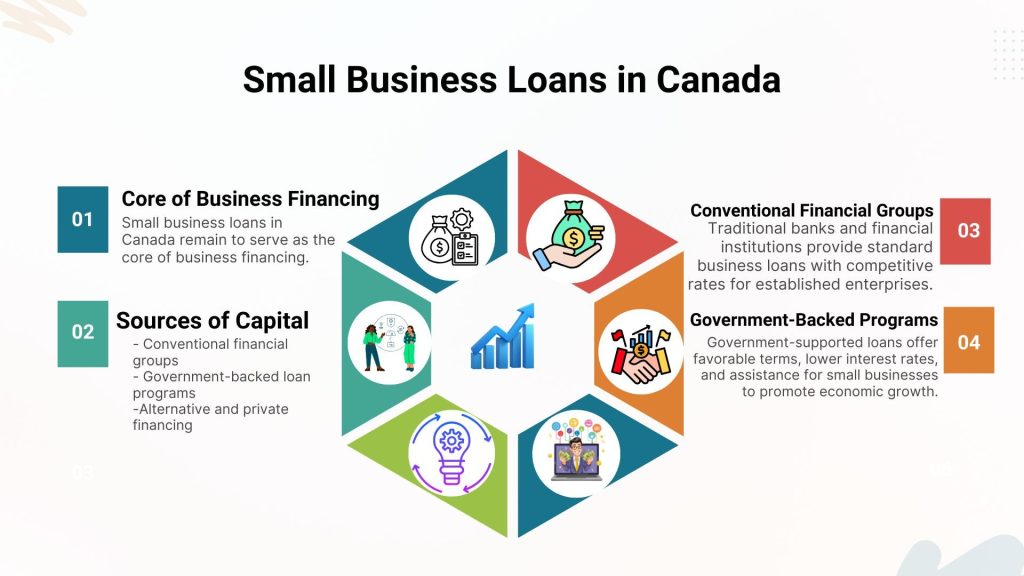
Each funding lender varies in terms of interest rates, eligibility conditions, installment flexibility, and risk evaluation demands. Understanding these variances is essential when choosing the most suitable financing option.
Chart 1: Small Business Funding Sources in Canada
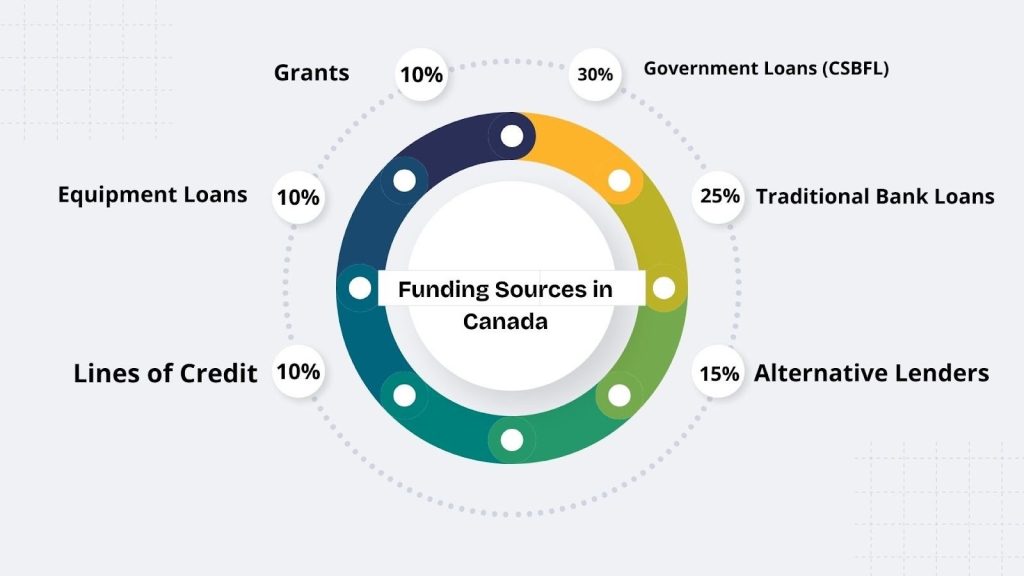
This distribution highlights the strong function of government-backed loans while also showing the growing importance of alternative financing and flexible lending solutions.
Government Small Business Loans and CSBFL Programs
Government-backed small business funding is among the most reliable financing choices accessible in Canada. The Canada Small Business Financing Loan (CSBFL) program is particularly designed to encourage lending to small businesses by minimizing risk for financial organizations.
Through CSBFL loans, businesses can access capital for:
- Purchasing tools and equipment
- Rental renovations
- Buying commercial resources
These loans enable more affordable financing, especially for small businesses that may not apply for typical lending under accepted risk models.
Flexible Business Financing Options for Operational Stability
Flexible business capital options are especially valuable for businesses experiencing seasonal revenue declines or erratic cash flow cycles. These financing tools permit business owners to maintain cash flow without joining long-term debt structures.
Common flexible financing solutions include:
- Business lines of credit
- Temporary working capital loans
Lines of credit afford on demand access to resources, enabling businesses to obtain only what they need and pay charges solely on the applied amount. This flexibility improves financial leadership and operational security, especially during periods of turbulence.
Equipment Loans, Leasing, and Industry-Specific Financing
Asset acquisition is often necessary for growth, but large initial investments can impact cash flow. Machinery loans and leasing options allow businesses to acquire crucial machinery, transportation, or technology, avoiding excessive capital stress.
Equipment loans offer long-term ownership advantages, while leasing solutions offer flexibility and lower early costs.
Industry-specific loan options are also generally available, including
- Commercial truck loans for logistics, transit and development areas
- Farm and agriculture loans arranged around seasonal revenue patterns
- Franchise loans created to support startup costs and expanding efforts
These tailored financing products match repayment periods with industry-specific monetary cycles and reduce financial anxiety.
Working Capital Financing and Loan Preparation
Working capital financing serves a vital role in making sure that daily business activities operate smoothly. These loans enable covering essential needs such as
- Benefits
- Rent and services
- Inventory ordering
- Short-term service costs
To improve loan approval for applicants, businesses must submit professionally organized documentation. Effective loan planning typically includes:
- precise financial forecasts
- Detailed cash flow declarations
- Revenue estimate and expansion methods
Clear evidence shows financial obligation and reassures investors of the business’s repayment ability.
Flow Diagram 2: Funding Process from Application to Approval
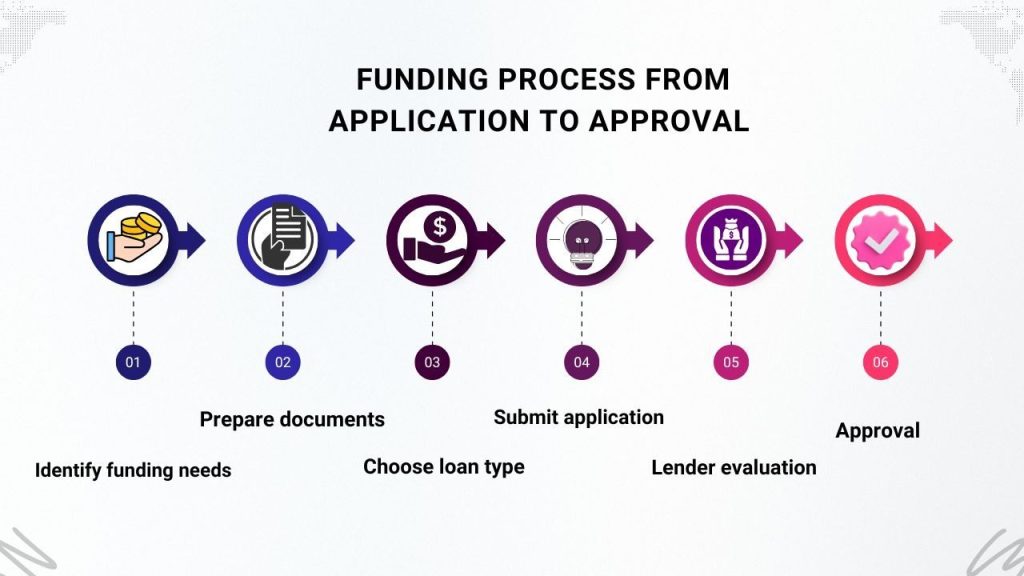
Visual cue: A graphical or circular diagram with icons for each stage, illustrating the complete financing process from inspection to fund payment.
This planned process allows businesses to manage financing properly and prevent common request mistakes.
Small Business Grants and Broker Support
Small business loans offer non-repayable capital opportunities, often aimed at creativity, longevity, technology utilization, and social development projects. While loans are highly affordable, they can substantially diminish the total cost of repayment. Evaluating grants and loan options concurrently can be complex. Working with a business loan broker gives practical advantages, such as:
- Access to multiple financiers
- Evaluation of interest rates and repayment conditions
- Customized financing plans aligned with business goals
Broker support improves efficiency and increases the likelihood of securing favorable financing terms.
Building a Strategic Financing Approach
Canada’s small business financing system provides a wide range of solutions, from CSBFL loans and commercial property financing to flexible business lines of credit, grants, and industry-specific funding.
Selecting the right financing option requires aligning business objectives with cash flow capacity, growth strategy, and long-term financial planning. A balanced funding approach strengthens resilience and supports sustainable expansion.
BCSOD aims to offer helpful, research-backed advice on business loan solutions, small business loans in Canada, business mortgage financing, flexible business financing options, and equipment loans and leasing, empowering entrepreneurs to make correct lending decisions and develop financially solvent businesses everywhere.
FAQs: Business Loan Solutions in Canada
1. What are the main types of business loan solutions available in Canada?
Canada offers different business loan solutions, such as small business loans, business mortgage financing, government-backed loans like CSBFL, lines of credit, equipment loans, leasing alternatives, and flexible capital designed to meet various business demands.
2. How can small businesses qualify for a Canada Small Business Financing Loan (CSBFL)?
To apply for a CSBFL loan, a business is required to fulfill eligibility conditions such as working for revenue, having a total yearly income under a certain amount, and using the money for approved goals like capital purchases, freehold enhancements, or commercial asset investment. Proper records and financial planning increase approval chances.
3. What are flexible business financing options for small businesses in Canada?
Adaptable financing choices involve business lines of credit and short-term working capital loans. These solutions enable businesses to utilize funds on demand, pay interest only on utilized amounts, and retain functional stability during seasonal or changing cash flows.
4. How do equipment loans and leasing help businesses grow?
Equipment loans provide businesses long-term ownership of important machinery, technology, or vehicles, while leasing allows lower initial costs and flexibility. Both options help businesses increase revenue without putting undue impact on cash flow. Industry-specific financing is also offered for categories like agriculture, logistics, and franchises.
5. Can business loan brokers help in securing funding?
Yes. Business loan agents offer access to several lenders, examine interest rates and installment terms, and create specific financing strategies. Their guidance can vastly increase the likelihood of approval and help small business owners choose the most appropriate business loan decisions.