


You need more than just a good idea to run a business. You also need a steady stream of cash to cover everyday expenses. This is where working capital financing becomes very important. Flexible funding can make the difference between growth and stagnation, whether you are dealing with seasonal changes, late payments, or the need to grow.
This guide will explain how working capital financing works, why it is important, and how options like working capital loans for small businesses, cash flow financing, and small business working capital solutions can help you stay financially stable and competitive.
What is financing for working capital?
Working capital financing is money a business borrows for a short period to cover its daily operating costs. These may consist of:
- Payroll
- Rent and utilities
- Buying Inventory purchases
- Payments to suppliers
- Marketing expenses
Similar to long-term loans used for major investments, working capital financing ensures your business can maintain rent and bill payments.
Why Working Capital Is Critical for Small Businesses
For small businesses, maintaining enough working capital is vital for several reasons:
1. Cash Flow Stability
Irregular income cycles can disrupt operations. Working capital ensures you can pay expenses even during slow periods.
2. Chances for Business Growth
If you have enough money, you can quickly hire staff, market your business, or grow your operations.
3. Getting ready for emergencies
You can handle unexpected costs, like fixing broken equipment or supply chain issues, without getting stressed out about money.
4. Trust between suppliers and customers
Paying on time builds better relationships with suppliers and makes your business look better.
Types of Working Capital Financing

Understanding your options helps you choose the right funding strategy. Below are the most common types:
1. Loans for small businesses to use as working capital
Small business working capital loans are short-term loans designed to cover day-to-day costs.
Features:
- Set a schedule for repayment
- Fast process for approval
- Available from banks and other lenders
Best for:
- Covering short-term cash needs
- Handling changes in demand during different seasons
2. Cash Flow Financing
Cash flow financing allows businesses to borrow based on projected future revenue rather than physical assets.
How it works:
- Lenders evaluate your sales history
- Loan approval is based on expected income
- Repayment is often tied to revenue flow
Benefits:
- No collateral required in many cases
- Ideal for service-based businesses
3. Business Line of Credit
A line of credit provides flexible access to funds up to a certain limit.
Advantages:
- Pay interest only on the amount used
- Reusable credit line
- Suitable for ongoing expenses
4. Invoice Financing
This option allows businesses to borrow against unpaid invoices.
Benefits:
- Improves immediate cash flow
- Reduces waiting time for customer payments
5. Merchant Cash Advance
A lump sum is provided in exchange for a percentage of future sales.
Best for:
- Businesses with strong daily sales
- Retail or eCommerce operations
How to Choose the Right Financing Option
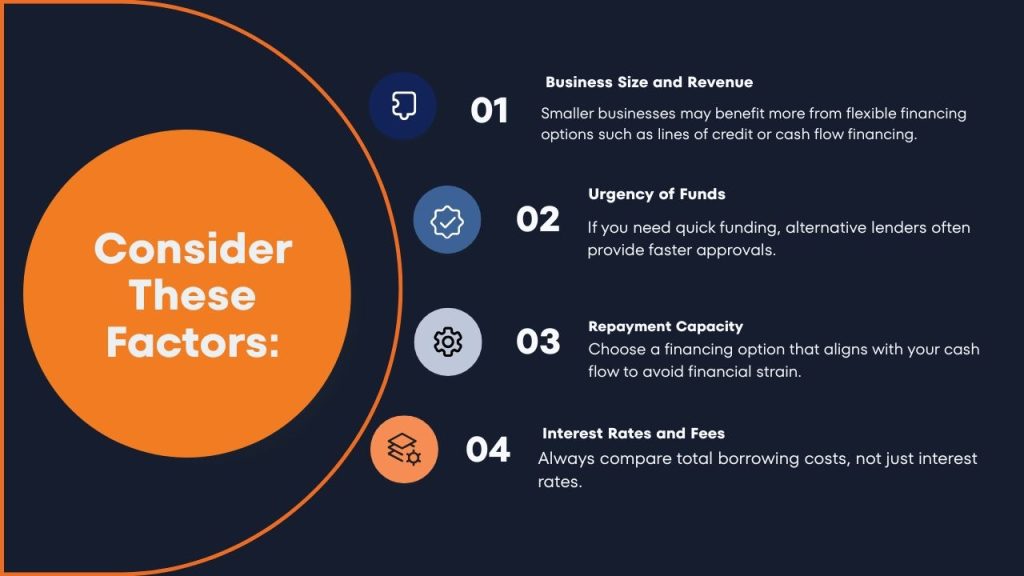
Selecting the best working capital solution depends on your business needs and financial situation.
Benefits of Working Capital Financing
1. Improved Liquidity
Ensures your business can meet short-term obligations without stress.
2. Increased Operational Efficiency
Smooth operations lead to better productivity and profitability.
3. Growth Enablement
Access to funds allows you to seize new business opportunities quickly.
4. Financial Flexibility
Different financing options provide tailored solutions for unique business needs.
Common Challenges and How to Overcome Them
1. High Interest Rates
Solution: Compare multiple lenders and improve your credit profile.
2. Short Repayment Terms
Solution: Choose flexible options, such as lines of credit.
3. Approval Difficulties
Solution: Maintain accurate financial records and a strong cash flow history.
Best Practices for Managing Working Capital
To maximize the benefits of working capital financing, follow these strategies:
1. Monitor Cash Flow Regularly
Use accounting tools to track income and expenses.
2. Optimize Inventory Management
Avoid overstocking or understocking.
3. Speed Up Receivables
Encourage faster customer payments through incentives.
4. Negotiate Better Payment Terms
Work with suppliers to extend payment deadlines.
When Should You Consider Working Capital Financing?

You should consider working capital financing when:
- You experience seasonal revenue fluctuations
- Customers delay payments
- You want to expand operations
- You face unexpected expenses
- You need to maintain a consistent cash flow
Real-World Example
Imagine a small retail business preparing for a peak season. The owner needs to purchase inventory in advance but lacks immediate funds. By using working capital loans for small business, they can stock up on products, meet customer demand, and generate higher revenue during the season.
Similarly, a service-based company awaiting client payments can use cash flow financing to cover payroll and operational costs without issue.
Future Trends in Financing Working Capital
The world of financing is changing quickly, giving people more options that are easier to get and more flexible:
1. Platforms for Digital Lending
Faster approvals and easier applications.
2. Credit Assessment Using AI
Better risk assessment and loan offers that are tailored to each person.
3. Financial Solutions Built In
Business software platforms that come with built-in financing.
Final Thoughts
BCSOD understands the real challenges that small and medium businesses face, especially when it comes to managing day-to-day cash flow. Now, having consistent liquidity is not just an advantage. It is a necessity for survival and growth.
You can keep your business strong, flexible, and ready to grow by tracking cash inflows and outflows, comparing financing options, and using smart money management techniques.
FAQ
1. What is the purpose of working capital financing?
People use working capital financing to cover short-term costs such as payroll, rent, inventory purchases, and utility bills.
2. Are working capital loans good for new businesses?
Yes, startups can qualify, but approval usually depends on expected revenue, their business plans, and overall financial stability.
3. What makes cash flow financing different from regular loans?
Cash flow financing is based on how much money you expect to make in the future. Traditional loans, on the other hand, usually need collateral and a good credit history.
4. Can I get a loan for working capital if I have bad credit?
Yes, many alternative lenders will lend you money based on your business’s cash flow rather than your credit score.
5. How soon can I get money to run my business?
Depending on the lender and the paperwork, it can take anywhere from 24 hours to a few days to get approval and money.
6. What are the most common ways to get working capital?
Short-term loans, business lines of credit, invoice financing, and merchant cash advances are all common choices.
7. Do I need to put up collateral for working capital loans?
Not always. Some lenders offer unsecured loans, but secured options may provide better interest rates.
8. What is the typical repayment term?
Repayment terms vary but usually range from a few months to 2 years for short-term working capital loans.
9. How much working capital can a small business borrow?
The loan amount depends on revenue, creditworthiness, and lender policies, typically ranging from a few thousand to several hundred thousand dollars.
10. Is working capital financing tax-deductible?
Interest paid on business loans is often tax-deductible, but it’s best to consult a tax professional for specific guidance.