

Access to capital can make or break a growing company. Whether you want to expand, upgrade equipment, or manage cash flow, the right loan can unlock new opportunities. This guide explains how to get a Canada Small Business Financing Loan and use it wisely for long-term growth.
Canada Small Business Financing Loan
The Canada Small Business Financing Loan, often called the CSBFP loan, is a government-backed program designed to help small businesses access funding more easily. Instead of lending money directly, the government shares the risk with approved lenders like banks and credit unions.
This program supports businesses that may struggle to qualify for regular loans. Because the government guarantees part of the loan, lenders feel more confident approving applications.
If you want a detailed overview of the structure and benefits, you can explore the official Canada financing program guide.
An SME loan Canada option like this can help finance equipment, property improvements, and expansion. It’s not free money, but it offers structured, accessible funding with reasonable terms.
Think of it as a safety net that encourages lenders to say “yes” more often.
How the Canada Small Business Financing Program Works
The CSBFP loan works through a partnership between the federal government and private lenders.

Here’s how it flows:
- You apply through a bank or financial institution.
- The lender reviews your business plan, financials, and credit history.
- If approved, the government guarantees a large portion of the loan.
- You repay the lender according to agreed terms.
The government does not give you the money directly. Instead, it reduces the lender’s risk. If the borrower defaults, the government covers a portion of the loss.
This risk-sharing model helps smaller businesses compete with larger companies that already have strong credit histories. It also increases approval rates compared to traditional lending alone.
Loan amounts can reach up to $1 million, depending on eligibility and purpose. However, real estate financing limits differ from equipment or leasehold improvement limits.
Interest rates are capped. Lenders cannot charge unlimited rates under this program. This protects borrowers from extreme pricing.
In simple terms, imagine you’re trying to borrow money from a cautious friend. Now imagine someone trustworthy promises to cover most of the risk if things go wrong. Your friend suddenly feels more comfortable lending. That’s how the program works.
This makes it one of the most reliable SME loan Canada solutions available today.
Who is Eligible for a Small Business Financing Loan in Canada?
Not every business qualifies. The program focuses on small and medium-sized enterprises operating in Canada.
Eligibility depends on:
- Business type
- Annual revenue
- Purpose of the loan
- For-profit status
The goal is to support active, revenue-generating businesses—not passive investments.
Eligible Businesses
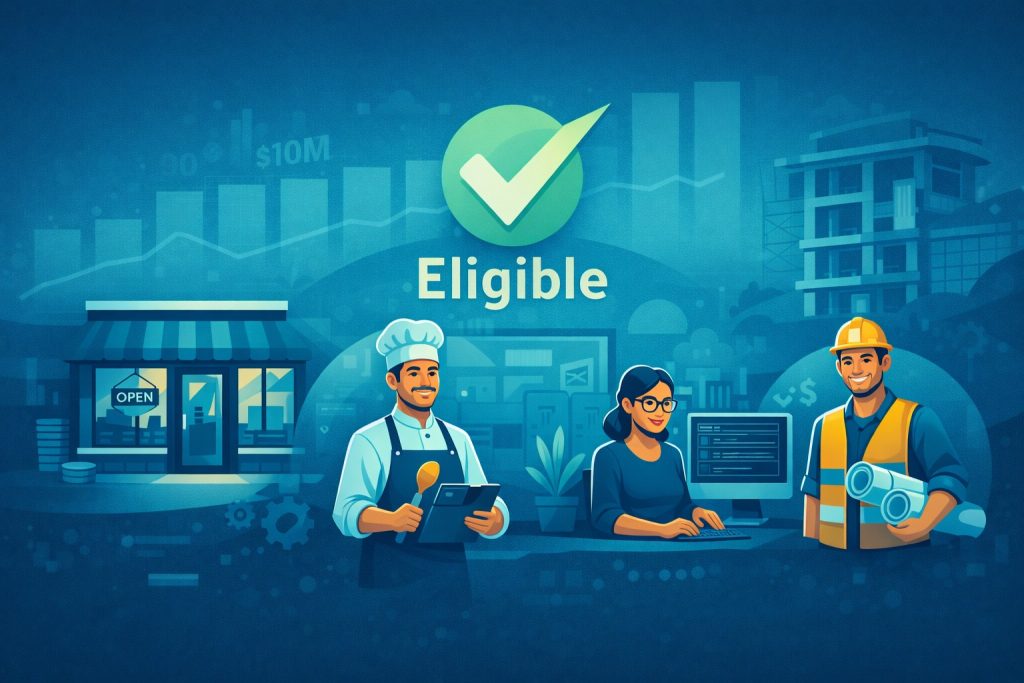
Most for-profit businesses operating in Canada qualify. This includes retail stores, restaurants, construction companies, manufacturers, technology firms, and franchises. Service businesses tied to agriculture—like harvesting services—may also apply.
Both new and existing businesses can apply, making this useful for expansion or even as a Startup business loan Canada option.
If your business is registered in Canada and actively trading, there’s a strong chance you meet the baseline requirements.
Ineligible Businesses
Farming operations do not qualify under this program. They must apply through agricultural loan programs instead.
Non-profit organizations, charities, holding companies, trusts, and businesses focused solely on passive income (like pure rental properties) are also excluded.
If your business does not actively produce goods or services, you likely won’t qualify.
Revenue and Size Requirements
To qualify, your business must generate less than $10 million in annual gross revenue.
There is no strict minimum revenue, but lenders expect proof that the business can repay the loan. Even startups can apply, but they must present strong projections and a solid plan.
The smaller your company, the more this program is designed to help.
What Can the Loan Be Used For?
While this program is for businesses, understanding typical funding uses helps clarify how it supports operations and growth.
Paying Off Debts
You generally cannot use the CSBFP loan to refinance existing debt. However, structured financing can improve cash flow and reduce financial pressure indirectly.
Home Fixes (Business Property Improvements)
Funds can cover leasehold improvements, renovations, or upgrading commercial property. For example, remodeling a storefront or updating plumbing in a restaurant.
Medical Bills
Medical bills are not eligible. This is strictly business financing.
Big Life Events
Personal life expenses do not qualify. The loan must support business activities.
Major Purchases
This is where the program shines. You can purchase equipment, machinery, vehicles for business use, or commercial real estate. For many, this acts as a powerful capital investment tool.
Emergencies or Help
While not designed as emergency funding, it can help stabilize operations during expansion or strategic shifts.
Think of it as fuel for your business engine—not personal spending money.
Canada Small Business Financing Loan for Specific Industries
Allowed Industries
Most sectors qualify, including retail, construction, manufacturing, hospitality, technology, and franchise operations. Service providers supporting agriculture—such as companies that lease harvesting machinery to farmers—can also apply.
The program aims to strengthen the backbone of the Canadian economy: active, revenue-generating small businesses.
Not Allowed
Farming operations are excluded. They must apply through agricultural-specific financing programs.
Pure rental property businesses, holding companies, trusts, and non-operating entities also do not qualify.
If your company actively sells products or services, you’re likely within the eligible category.
Benefits of Canada Small Business Financing Loan
Easy Access to Cash
Because the government shares the risk, lenders are more open to approving applications. This increases access to capital.
Big Loan Amounts
Businesses can access substantial funding—up to $1 million in some cases—allowing for serious expansion plans.
Good Rates and Rules
Interest rates are regulated. Fees are structured and transparent. This makes repayment predictable and manageable.
Helps Growth
This loan supports long-term investments like equipment, renovations, and real estate. These assets generate revenue over time.
Think of it as planting a tree. You invest today, and it produces fruit for years.
For many companies, this becomes a core piece of their broader business funding strategies Canada framework.
Types of Small Business Financing Options in Canada
The CSBFP loan is powerful—but not the only option.
Grants and Free Money
Government grants provide non-repayable funding. However, they are competitive and often industry-specific.
Bank Term Loans
Traditional bank loans offer lump-sum funding with fixed repayment schedules. A working capital loan helps manage short-term operational costs like payroll and inventory.
Unlike the CSBFP loan, these loans rely heavily on credit strength and collateral.
Lines of Credit
A business line of credit provides flexible access to funds. You borrow only what you need and pay interest on used amounts.
This works well for managing seasonal cash flow gaps.
Government Loans
Programs like the CSBFP loan reduce risk for lenders and expand approval opportunities.
Alternative Lenders
Online lenders offer faster approvals but often charge higher interest rates. These can help when banks decline applications.
Equity Investors
Instead of borrowing, you can raise capital by selling shares. This avoids debt but reduces ownership.
Smart business funding strategies Canada often combine multiple financing tools instead of relying on one source.
How to Apply for a Canada Small Business Financing Loan
Start by preparing a clear business plan. Lenders want to see how the loan will generate revenue.
Next:
- Gather financial statements.
- Prepare cash flow projections.
- Check your credit score.
- Identify collateral if required.
Approach an approved lender. Not all institutions participate, so confirm first.
During the meeting, explain:
- Purpose of the loan
- Repayment plan
- Growth strategy
Be honest about risks and challenges. Lenders appreciate transparency.
If approved, review terms carefully before signing.
The process usually takes a few weeks, depending on documentation and lender workload.
Preparation is the key difference between approval and rejection.
Documents Required for Application
Expect to provide:
- Business registration documents
- Articles of incorporation (if applicable)
- Recent financial statements
- Tax returns
- Cash flow projections
- Personal credit information
- List of assets and liabilities
Startups may need:
- Market research
- Detailed revenue forecasts
- Supplier agreements
- Lease agreements
Think of your documents as proof of trustworthiness. The clearer and more organized your paperwork, the smoother the approval process.
Incomplete documentation is one of the biggest delays in SME loan Canada applications.
Interest Rates, Fees, and Repayment Terms
Interest rates under the CSBFP loan follow set limits.
They may be:
- Fixed rate (lender prime rate + allowed margin)
- Variable rate (floating with market conditions)
There is also a government registration fee, usually a percentage of the loan amount. Lenders may pass this cost to borrowers.
Repayment terms depend on asset type:
- Equipment: typically up to 10 years
- Real estate: longer terms
Monthly payments include principal and interest.
For example, a $50,000 loan at 7% over 7 years would have structured monthly payments that gradually reduce principal.
Understanding your repayment structure helps avoid cash flow stress.
Before signing, calculate how payments fit into projected revenue.
Borrowing should support growth—not create financial strain.
Common Reasons for Loan Rejection
Applications may be rejected due to:
- Weak credit history
- Poor cash flow
- Incomplete documentation
- Unrealistic projections
- High existing debt
Sometimes the business plan lacks clarity. Lenders need confidence that revenue will cover repayment.
Another common issue is applying for the wrong type of loan.
Preparation and realistic expectations reduce rejection risk significantly.
Tips to Improve Your Approval Chances
Improve your credit score before applying.
Reduce unnecessary debts.
Strengthen cash flow reporting.
Present a clear growth plan.
Show how the loan directly increases revenue.
Build relationships with lenders early—even before applying.
Think of approval like a job interview. Preparation, confidence, and clarity matter.
A strong application demonstrates responsibility and strategic thinking.
This approach improves success rates for both Startup business loan Canada applicants and established companies.
Alternatives to Canada Small Business Financing Loan
If you don’t qualify, consider:
- Business line of credit
- Working capital financing
- Equipment leasing
- Invoice factoring
- Angel investors
- Venture capital
Each option serves a different purpose.
For short-term needs, revolving credit works well. For long-term growth, structured loans are better.
Diversifying business funding strategies Canada helps reduce dependency on a single source.
Frequently Asked Questions (FAQs)
How much can a small business loan in Canada?
Under the CSBFP loan, businesses may access up to $1 million, depending on asset type and eligibility.
Can a Canadian get an SBA loan?
No. SBA loans are U.S.-based programs. Canadians must use Canadian government-backed programs.
Can I get a loan to buy a business in Canada?
Yes. Many lenders offer financing for business acquisition if financials are strong.
What is the monthly payment on a $50,000 business loan?
It depends on interest rate and term. A 7-year term at moderate interest may result in manageable monthly payments.
Can a startup get a business loan?
Yes, but approval depends on projections and business strength.
What is the best small business loan to get?
The best loan fits your business stage, risk profile, and growth goals.
Conclusion: Is This Loan Right for Your Business?
The CSBFP loan is one of the strongest SME loan Canada solutions available today. It blends government backing with private lending structure, making access to capital more realistic.
If your goal is expansion, equipment upgrades, or property investment, this program offers structured, predictable financing.
However, the right choice depends on your financial position and growth plan.
Smart borrowing supports growth. Poor planning creates stress.
Review your goals, compare options, and choose funding that strengthens your long-term vision.
When used wisely, this loan can become a powerful tool in your overall business funding strategies Canada plan.